Akpetushie: Pronounced “Appehtooshie” is the local moonshine and could forgivably be confused for nail polish remover mixed with pure alcohol. Drink with caution. It will give you the best/worst hangover of your life.
Books: There was a good second-hand bookshop in Cape Coast called Blackstar Bookshop near the castle (and next to the Baobab Café which, by the way, has great banana bread and supports a good local café.
Birkenstocks: You can find original ones in Accra Mall for the usual price, second-hand ones all over the country for about 10-20 GCs, and rip-offs for about 10 GCs.
Caning or “beating” students: Caning students is common practice at schools. Many Ghanaians still believe this is how you “correct” poorly performing students. I was not warned about this when I went to volunteer at a school and it was quite shocking. The caning was quite violent, not “soft”, as if teachers were acting out some kind of abuse they’d experienced themselves (which they probably had). If you protest against it, Christian teachers will invoke the Bible: “Spare the rod, spoil the child.” Worse still, parents might urge you to beat their children. If you want to oppose it, you have to remain strong. Ghanaians have virtually no knowledge of learning disabilities. Dyslexia is almost unheard of. Consequently, struggling children (much as they have been elsewhere) get beaten and verbally berated and made examples of for not being able to complete some task that requires reading and writing. The teachers have no idea that their violence doesn’t help. So, brace yourself for this if you plan to teach as a volunteer. There are a handful of schools where teachers don’t beat: the difference is startling. A teenage girl died recently after a beating at school which put the issue on the national radar for a few weeks. Opinions were roughly divided between for and against. I was very against. I shall write a separate post on my experience as well as potential strategies you could use at school to stop or reduce beating. Look for “caning” as a key word.
Clothes (second-hand): Obruni wawu means “dead white man” and is used to describe the prolific second-hand clothing sold everywhere. There is a myth that no citizen of a developed country would wear the clothes of a dead person, so it’s dead obrunis’ clothes that are sent to be sold as second hand clothes—they couldn’t possibly be from the living. This, often very good quality, second-hand clothing is a bargain: T-shirts for 2-5 GCs, gypsy skirts for about 10 GCs and new jeans for 10 GCs. Trying them on over sticky bodies beside open sewers is another story…
Condoms: Sexually transmitted diseases are rampant. While the rate of HIV/Aids is about 2.9% across the country, it’s much higher in urban areas. Use condoms. You can buy them in pharmacies, supermarkets and gas stations from 10 pesewas to a few Cedis.
Drinking Water: You can buy “puuure watah!” just about anywhere for 5 pesewas—look for the blue ice boxes sitting all along the streets. Just how pure it is, however, is anyone’s guess. You can buy bottled water at shops everywhere too for about 50 p.
English: It is the official language and is spoken almost everywhere, except in the most remote villages. And, while it’s the official language, it has its own idiosyncrasies. Written standards are pretty poor, even at university. If you’re coming to teach, anything related to literacy or the basics of grammar for the level you’re teaching would be helpful. Children love colourful story books. You can buy mass produced ones here or bring your favourites from home.
Feminine Hygiene: Tampons/tampax are not widely available other than in supermarkets in Accra so bring your own. Pads are the norm and are available everywhere. Due to environmental conditions and some malaria medication, a few women suffer from longer or more painful than usual periods. Ensure that you’re prepared for this. Due to humidity and antibiotics, it’s not uncommon for women to suffer from yeast infections. Fortunately, treatments are available in pharmacies everywhere. Don’t be shy asking for personal items in shops or pharmacies—Ghanaians are not embarrassed by such things.
Flip-flops/thongs: called “slippers” in Ghana. You can buy them everywhere for one GC or so. Still, having one good quality pair to support tired feet is worth it.
Food: In a nutshell, the standard dishes are heavy on the carbs—yam, plantain, cassava, rice—and light on greens, if at all. There is usually pépé (chilies) in dishes, but you can avoid it. I have IBS and was super cautious of everything, but I have had less stomach troubles here than at home—possibly because most food is unprocessed; it’s a challenge to find “junk” food. I’ve eaten salad everywhere except off the street. Sunshine Salads in Osu (just ask anyone near Koala supermarket) or in Labone are heaven sent if you’re craving great salad. You can buy all the basic garden vegetables at most markets. Bean dishes are plentiful. It’s easy to be vegetarian or vegan—ask for soups without meat or stick to the non-meat dishes.
Football: You know how Canadians are with ice hockey; Aussies/Indians/Pakistanis are with cricket; Kiwis with Rugby; and North Americans with basketball? That’s how Ghanaians are with football. Chelsea, Manchester and Liverpool are the teams of choice. Some also support Barcelona. Kids, especially boys, love anything football related as gifts. You can buy footballs and team paraphernalia on the streets everywhere.
Friends: It’s easy to make friends with Ghanaians. However, quite a few Ghanaians I know could talk all four legs off every donkey on the African continent. So if you approach someone for a chat, make sure you have time to kill because Ghanaians almost always live up to their friendly reputation. And they always ask for your number. Be selective about handing out your number unless you don’t mind two a.m. phone calls. Ghanaians like to take advantage of free or hugely discounted calling rates and call each other at all hours of the night without a second thought, and you will certainly not be denied this honour.
Fruits: Oranges (green in colour and the tastiest ever), pineapples, bananas and coconuts are abundant all year round, but coconuts and pineapples are grown in the south and trucked up north. Mangoes are bountiful in season too (now).
Gifts: Aside from football and stationery mentioned elsewhere, people love colourful stickers. Also, several friends brought bubble liquid and blew bubbles to the delight of children and adults everywhere, and handed out bottles out to the kids. Old clothes: many Ghanaians value clothes you leave behind or clothes from home you no longer want. They’re good to give to family/friends when leaving.
Greetings: (also see Language). Ghanaians will spend the first few minutes upon meeting asking after the other, then family, health and work, before getting down to the issue that they have come to discuss. No one ever responds in the negative and says they are not fine (or I am yet to hear it anyway), even if they’re clearly suffering. Ghanaians make the best of it, which keeps things moving and people smiling, no matter what. If you need to approach people to ask for help, it’s more appropriate to say, “hello, how are you?” and wait for a genuine response and then ask your question, rather than walking up and saying, “how do you get to…?!” without first acknowledging the person.
Hair cuts: The last time a hairdresser cut my hair was early 2007 in an excellent tiny salon in Phnom Penh. I cut it myself now. I usually use nail clippers—I figure I can’t do too much damage that way. When I’m feeling brave I use sewing scissors. If you’re not ready to take that leap of faith, there is a woman at Labadi Beach Resort in Accra who cuts Caucasian hair. Ask for the “Madame”. If you have African hair—lucky. There are salons literally everywhere! Braiding is relatively inexpensive and costs about $5 for a head of braids. Extra if you want fake hair braided in! (Although I cut my own hair, I’ve never had it braided…pain!)
Hospitals/clinics: It’s very hard to find quality medical treatment outside of Accra. In fact, it’s not easy to find it in Accra. You can get some kind of treatment in other cities, towns and villages, of course, but I’ve had many issues with doctors defaulting to malaria, no matter what you present, and just not caring. If you’re coming for more than three months, have all important check-ups before leaving. Cocoa Clinic in Accra was probably the most organized and reliable clinic I’ve been to. You still have to wait, of course.
Jeans: Contrary to recommendations, jeans are OK in Ghana. They are nothing if not sturdy, comfy, and you can wear them for a week without washing…if you have to!
Kokrobite Beach gets a special mention as it’s notorious for robberies. While Ghana is very safe overall, everyone I know who visited Kokrobite, bar one person, got mugged on the beach or their room was broken into—or it was attempted. Usually a group of young boys surround you on the beach and demand your backpack. Most people hand it over. So, if you go, don’t take anything you will mind giving up.
Language: The official language is English, but most Ghanaians speak the language (or two or three or four) of their home area. Learning simple phrases in the local language of your area will create a connection with and respect among local people. Ghanaians place great stock in greetings, by the way, and it’s a safe bet to always greet everyone when entering a room or vehicle and always return a greeting, wherever you are.
Laptops: It’s safe enough to bring one, but exercise caution. Don’t carry it around in a flashy laptop bag; use a backpack with a laptop compartment instead. Always unplug them when not in use to protect them from power surges. (See: Power.) Finally, the environment is harsh on laptops: salty and/or humid and/or dusty. Keep them covered when you’re not using them as they sometimes protest and just stop working.
Malaria: It’s so common that it’s “like catching a cold,” as Ghanaians say. Unfortunately, this is true. It is common but avoidable. I recommend bringing mosquito spray to prevent bug bites and always sleep under a mosquito net. Certainly obtain one of the standard anti-malarial medications from your health provider before coming to Ghana and take it as directed. The various medications have their pros and cons and I know people that have gotten malaria on all the main ones (Larium, Doxy, Malarone, etc)—none of them are failsafe. If you run out while in Ghana, they are widely available in pharmacies everywhere and much less expensive than in your home country (although made in India or China—if you’re ok with that). If you fall ill (although it’s unlikely), please inform someone immediately. Malarial symptoms are any or all of: extreme fatigue, hot or cold fevers, nausea, vomiting, diarrhea, and dizziness. Virtually everyone I know who had it felt the extreme fatigue—a tiredness that you cannot imagine if you haven’t felt it before. Many had a sensation of feeling “sunburnt on the inside”—radiating heat even if you’ve been inside all day. You can have tests for malaria at clinics or laboratories which are common in major towns and cities for anywhere between 2-10 Cedis. Even if you have malaria, the tests can be faulty and come out negative. The lesson in this is that the tests are often wrong so if you are presenting the symptoms, please strongly insist on receiving treatment. The treatment is widely available and you can get it over the counter at pharmacies—ask the pharmacist. It is best to have it recommended from a doctor or specialist.
Mapouka: Is both the name of the bottom shaking dance originating in The Ivory Coast now hugely popular in Ghana and the local version of rather alcoholic Irish cream. Not bad for a $2 bottle.
Men: If you’re a woman, be prepared for lots of attention, especially if you’re on the curvy/large side. My favourite strategy for deflecting marriage proposals is the one guaranteed to get laughs: “Well, I already have seventeen husbands, but if you don’t mind being husband number eighteen, yes, I will marry you…” Men and women alike will shake with laughter. Warning: Using this in a moving vehicle where the driver may swerve into oncoming traffic as he shakes can be dangerous. Now, some men will actually agree to be husband number eighteen. To which I say: “Ok, but you have to wait for the first seventeen to die.” This invites more laughter. Sometimes I offer to give some of my husbands to other women in the vehicle which invites great guffaws. Ghanaians have a great sense of humour and find any excuse to laugh. Some men will just walk up to you on the street and propose. On one occasion a world-weary old man came up to me and said, “If I were to be a younger man, I would like to marry you…” He looked so sad! And, some will hassle you more than is comfortable, but not often. Just tell them you’re waiting for your “husband”. If they ask where your wedding ring is, say you left it at home. Most women I know used these tactics at some point and they work.
Money: US dollars, Euros, Canadian and Australian dollars are easy to change at the numerous large and small exchanges dotted around the major cities. It’s reasonably safe to bring cash and keep it locked up somewhere in your room or in a safe, if you have one, and exchange it when you need it. You cannot use Mastercards. NO MASTERCARDS!! You can use Visa cards and withdraw cash at ATMs. Make sure you know your PIN. Now, do NOT use your credit card to pay for anything anywhere if you can help it. Indeed, there is no “plastic” culture here. Although you can use your credit cards at certain guest establishments, restaurants and retailers, I would try to avoid it. Credit card fraud is a huge problem. Someone may copy your card number and details if there is an imprint or record of the card left where you paid for the product or service. Traveller’s cheques are accepted although the rate is not as good as changing cash and banks can be very pompous about handling them. The easiest option is to bring cash and change it and/or a card you can withdraw with.
Obruni: This has become synonymous with the idea of “foreigner”, and is shouted at you almost everywhere in the south of Ghana. It means “white person” and can understandably annoy African American or Asian visitors who get the Obruni treatment as much as any other foreigner. I had one British African friend with long gorgeous braids who was called “Rasta ‘Bruni!” She had a sense of humour about it—useful in Ghana. In Tamale and Bolga you’ll get called “Solomia”, in the Volta: “Yevu”, and in Bawku or Hausa speaking areas: “Nasara”. There is no ill intention behind this, Ghanaians are just pointing out the obvious as far as they’re concerned, not being rude or racist, as the same treatment might be perceived at “home”.
Pens: School children value pens, pencils and notebooks very much. Instead of hauling them all the way from Australia, though, I could have bought them for a fraction of the cost in Ghana, which would have supported local traders and freed up space in my luggage. There are little stationery stalls everywhere.
Petty Crime: While reports of bag snatching, mobile phone snatching and break-ins are on the increase, Ghana is still very safe. Basically, have your wits about you. Don’t leave your bags wide open. One thing that my former boss alerted me to was bag slashing in crowd situations. A thief might slash the bottom of your bag or its straps and grab the contents, so if you’re in crowds hold it tight. Pickpockets are common in crowded areas. Don’t be afraid to get physical if someone tries to pickpocket you.
Pharmaceuticals: are readily available over the counter all over the country, again, for a fraction of the price you’d pay at home. A strip of 10 tabs of doxycycline is about one dollar. Cypro, general antibiotics, Immodium, and candidiassis treatments—tablet or creams—are widely available and inexpensive.
Photographs: Ghanaians are fascinated by photos of you, your family, friends and home. If you’re staying with a family, they will love to see an album of photos from home. They will also love to show you theirs. People love to be “snapped”. If you have the means, giving people photos of themselves is a popular gift.
Power: I’m not talking about the type mining companies like to wield around small African nations. I’m talking about the type that tends to cut out several times a day when you’re in the middle of something important. Here’s a tip: Unplug all electrical equipment when you’re not using it, or turn the power point off. A few weeks ago a surge hit the whole country. I awoke to the smell of burning rubber. The surge protector itself had blown up. Fortunately, it protected the electrical equipment. Countless times I’ve written a long email only to lose everything when the power cuts. Another tip: open Word or Notepad alongside the web browser, save in Word as you type, and then paste it into the browser. If the power cuts, it’s still there in Word or Notepad when it comes back on. Alternatively, I type it on a laptop at home, take it by pen drive to the café, paste and send it.
Power plugs: The British type. You can buy multi-socket thingamajigs in towns and villages.
Socks: You can buy socks cheaply on streets everywhere. Ghanaians do really like socks as gifts—or turn them into hand-puppets for kids at schools.
Sunblock: You can buy it in Accra, but it’s probably easier to bring your own.
Telephones: Mobile phones are everywhere, as are the "chips" (sim cards) you need to make calls. New basic mobiles cost anywhere from 30 GCs and up. Vodaphone and Nokia have deals going most of the time. Chips cost 1 GC (yes, one) for most networks. It costs about the same to call an overseas mobile as it does within Ghana, and most calls are cheaper late at night. You can text virtually anywhere in the world for as little as 5 pesewas.
Time: Forget everything you know about time and “how things work”. Life in Ghana rocks to its own unpredictable rhythm and has its own way of working itself out—which can be exceedingly frustrating at times. I have occasionally felt as if I were participating in a chaos theory experiment with malaria and upset stomachs thrown in just for fun. Long waits for buses scheduled to leave hours earlier and slow responses to anything bureaucratic are normal. It’s life. It will teach you to go with the flow. If you need to learn patience and inner calm, just come to Ghana and buy a ticket for anything with a start time. There’s nothing you can do about it so my advice is to leave assumptions and presumptions at customs, and you’re more likely to enjoy one of the friendliest nations on earth.
Toiletries: Face cleansing wipes are brilliant for not only removing dirt from your face, but for “washing” during water shortages. You can buy “obruni” shampoo at shops in Accra, Cape Coast, Kumasi and Bolga.
Toilets: Well, I write a lot about toilets. If you had IBS, you would too. Overall, they are conspicuous by their absence in public settings. Metro TV recently stated that twenty-million Ghanaians live without access to modern toilets (they use drop toilets). Of those, three million have no access to any at all. There are twenty-three million Ghanaians. So much for the former government’s “Ghana at 50” pledge to build more “public places of convenience”. They were going to build toilets every fifty kilometers on the main roads. It’s more like every five hundred kms—if you’re lucky. Basically, don’t expect to find any at trotro stations—although there are a few. Fortunately, STC now has really nice toilets at all its stations (not long ago it was rather distressing). Most hotels have facilities that you can “borrow” if you have to—be nice to the reception people and pretend to be interested in a room.
Transport: Ghana has one of the highest incidents of road accidents in the world. I can’t count the amount of times the vehicle I’ve ridden in has almost crashed. (Touch wood!) Trotros, the crowded minibuses, are the worst. However, it’s virtually impossible to avoid trotros and taxis if you plan to travel around, so take a few precautions. Try to travel during the day. Try only to take coaches like the STC (State Transport Company) or the Metro Mass Transit (the orange buses). If the driver is taking dangerous risks, Ghanaians will often shout at the driver. Don’t be afraid to shout out yourself or ask someone next to you to do so. In taxis I’ve often told the driver to slow down or not overtake into oncoming traffic.
Vegetables: You can buy cabbage, carrots, eggplant/aubergine, lettuce, potatoes, avocadoes (called “pear”), tomatoes, zucchini, cucumber, green beans, onion, ginger, garlic, and many other veggies besides, at markets all over Ghana, some only in season.
Viruses: the IT type; Internet café PCs are riddled with them. Many cafes still do not use anti-virus or, if they do, they’re often not up to date. So, if you’re planning to stick a pen drive into a PC, you need protection. I recommend downloading a free antivirus programme before you leave home and store it on your pen drive. It sounds like overkill, but you only have to lose everything once to understand the value of having antivirus on hand that you can upload as needed. Internet connections are still quite slow, at least to download anti-virus, and power is so erratic that it often cuts out half-way through a download. So bring it with you.

Vitamins: are also available everywhere. Those chewy orange vitamin C tablets sell for 20 pesewas a strip. You can get iron syrups over the counter which helps to build up strength after a bout of malaria.
Volunteering: If you’re looking for a serious volunteering organisaiton, it’s best to plan before you leave. Idealist.org has an excellent database of projects. You can also go here. However, you can find projects when you arrive by word of mouth or online—but it’s kind of nice to have someone meet you when you arrive.
Water: The water supply is erratic in many areas: on and off at will, it seems. Having some set aside in a bucket is always smart. Bucket baths are normal in regional areas where many people don’t have plumbing. In some places children have to carry water in buckets from a distance to fill up a larger reserve in the house where you’re staying so you can use it. Be mindful of that.
Zip/pen/jump drive: Bringing a 1G drive is invaluable. Use it for storing or transferring photos, writing email in Word and uploading it at a café later. You can buy a 1G drive for about $10 in Ghana.
If you have any brilliant tips of your own you would like to add, or corrections, or anything at all, please write a comment!
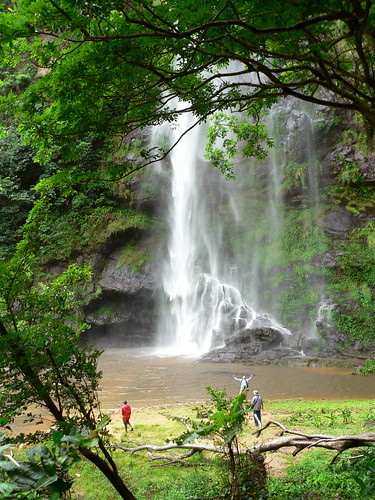
Packing image above courtesy of Stuart Frisby at Flickr , Kakum National Park image courtesy of Wikimedia Commons